Part of a successful regulatory strategy is to assess all available routes to licensing medicines and select the most appropriate option by carefully weighing the pros and cons of each.
Since Brexit, the regulatory landscape continues to evolve and one of the most popular post-Brexit routes is still the
), which was introduced in January 2024 by the MHRA.
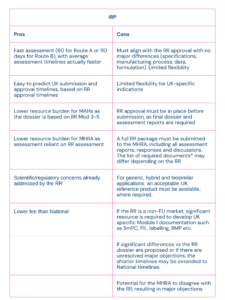
IRP enables the MHRA to rely on the expertise and assessment of a Reference Regulator (RR), including the EU EMA and EU member states, Australian TGA, US FDA, Health Canada, SwissMedic, Health Science Authority Singapore (HSA) and Japan’s Pharmaceuticals and Medical Devices Agency (PMDA), bringing therapies to UK patients faster. IRP can offer clear advantages where the UK application is closely aligned with an approval from an RR. However, it does not remove the need to meet UK regulatory requirements. The RR approval must have been based on a full standalone assessment.
Any differences between the RR approved dossier and the proposed UK dossier should be assessed early. Some differences may simply move the application from Route A to Route B, while more significant differences may make IRP unsuitable or result in the procedure reverting to a national timetable.
For generic, hybrid and biosimilar applications, applicants must also confirm that the proposed legal basis is eligible and that an acceptable UK reference product is available.
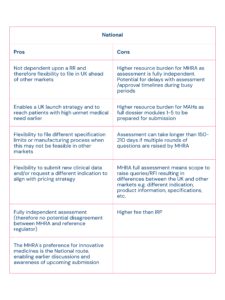
However, is the IRP always the optimal route for a pharmaceutical company holding marketing authorisations across multiple markets? The MHRA’s commitment to maintaining regulatory autonomy offers additional advantages that may make the national licensing route a more compelling option than IRP.
Let’s explore the advantages and disadvantages of the IRP vs the National procedure.
IRP Pros & Cons
When deciding which path is the best for your product, always consider all available options and the impact on project objectives, before making a final decision. Other routes to consider may also include Access Consortium or Project Orbis.
If you would like to discuss how Fusion Pharma can support you with your regulatory strategy, please email us at hello@fusion-pharma-limited.com or phone us on +44 (0) 203 1379 799.
While the information in this article is considered to be true and correct at the date of publication, changes in guidance and/or experience may impact on the accuracy of the information. Please refer to the relevant guidance for the latest information.